


Korpi
Forest to Field Kitchen


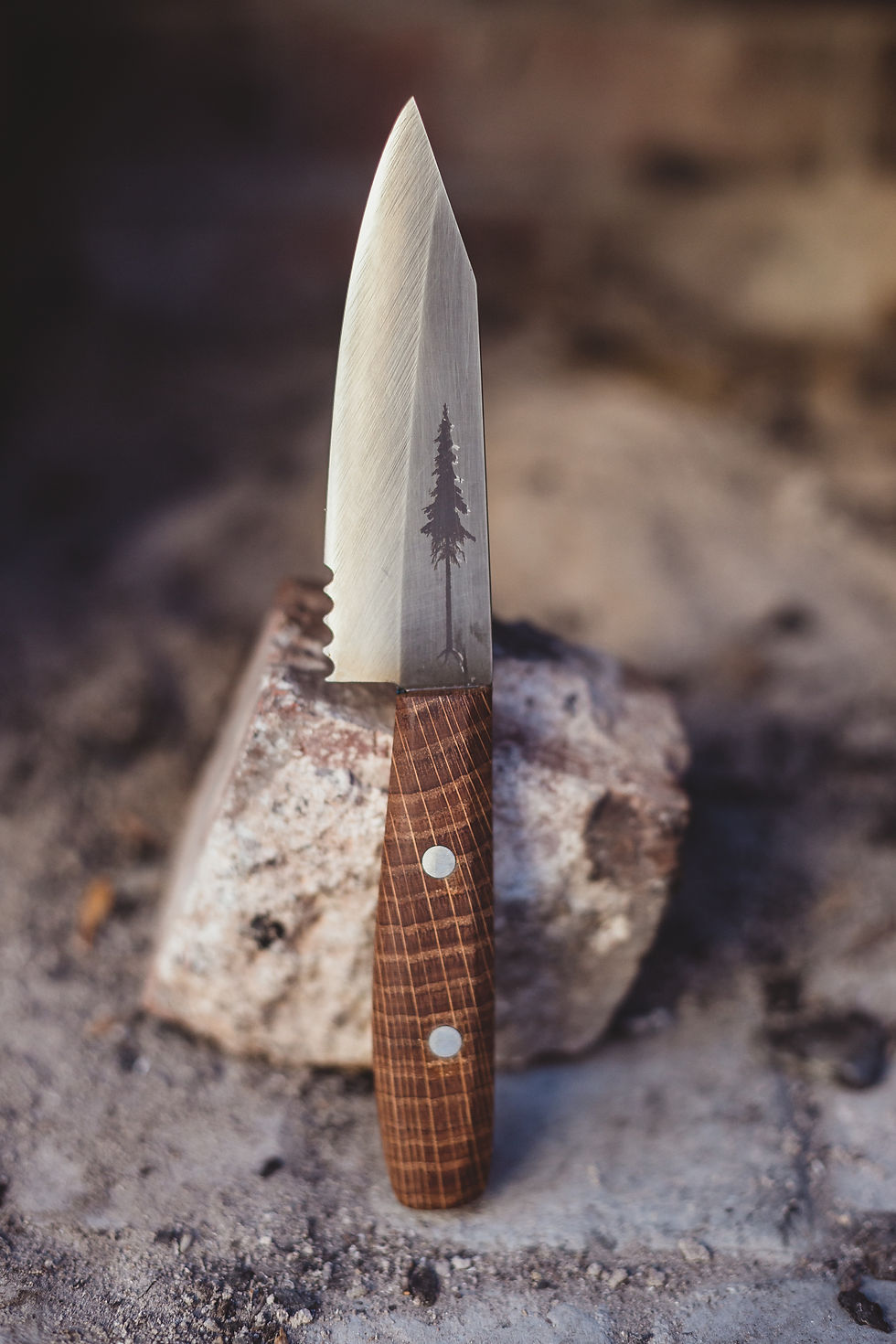


285€
I’ve known Sasu for years. He’s a former Michelin-star chef from Helsinki who now makes knives. A few months back, he asked me, “Do you have a knife that goes straight from field use into the camp kitchen?”
I went through my kit - maybe 15 knives - and realized: no, nothing does both well. He then asked, “Do you want to make one together?” And here we are.
The goal was simple: a knife that can field dress a deer, butcher a grouse, and then slice scallions or charcuterie for lunch. We discussed priorities, built prototypes in Finland, field tested them hard during hunting season in Canada, and one design quickly stood out.
The Korpi is that knife. It excels in the Canadian backcountry, balancing rugged utility with precise finesse—the exact result we were hoping for when we started this project.
It’s made from recycled Finnish steel, stained in coffee, full tang, and riveted to be tough - yet it holds a fine cutting edge for both field butchery and food prep. The serrations on the heel excel at cutting tendons, bone, and thick hide on moose and elk. The handle is crafted from native Finnish wood, stabilized for strength and durability in the field. Every decision was geared towards making the knife as useful and resilient as possible. Honestly, neither of us knew if we could create something that truly spanned from the forest to the field kitchen - but both of us agree: the Korpi has done exactly that.
We’re now releasing the first run of the Korpi, each knife carefully made by Sasu. It’s a process that takes time, but the result is a knife built to last and designed to do everything we set out for it to do. Pre-ordering is now available.


Backstory
Sasu Laukkonen is one of Finland’s best chefs, with nine years of Michelin stars under his belt. During the pandemic, he pivoted from fine dining to knife making, bringing the precision and care of the kitchen into crafting tools for the culinary world. I first met Sasu in 2019 at Food on the Edge, and we’d stayed in touch ever since. He’s a big fan of From the Wild, and watching the series made him think: the field knives we were using in the bush should be better.
When he asked if I had a knife that could competently go straight from field work into the camp kitchen, the answer was no. Outdoors knives are often thick like tanks—great for batoning wood, but terrible for food prep. We both wanted something that lived in both worlds: strong and thick at the spine for rugged work, yet fine and precise at the edge for detailed butchery and cooking.
Sasu had previously designed scallops and serrations for kitchen knives in Finland’s tomato industry, and I realized that concept could work in the field. We incorporated serrations at the heel so that when you hit thick hide or tendon, you can tear through it without dulling the tip—letting you move seamlessly from brutal work to fine work again.
We built a few prototypes in Finland, testing various ideas, and then I put them in the field: deer, elk, moose. The Korpi emerged as the clear choice - one knife that could do everything we needed right out of the gate. It’s tough, easy to sharpen in the field, and comfortable in the hand. It handles brutal tendon and hide work without dulling the tip, yet remains precise for prep and camp cooking.
The Korpi is now my go-to in the bush: one knife I can trust for everything, from field dressing to lunch prep.


Design

From the start, Sasu was clear: this had to be a full tang knife with rivets. I trusted his judgment—and quickly learned why. Knives seated into a handle can loosen if you push them hard, like when field dressing deer. I tested it myself with a smaller kitchen knife in the field, and it failed exactly that way. The full tang and riveted construction make the Korpi rock solid under real use.
Sasu was also insistent on the thickness at the spine. The knife needed to withstand tough work without yielding, and it does—solid, but not a tank. His background in Michelin kitchens and sustainability influenced every choice. The steel is 90% recycled finished steel of exceptional quality, sharpened and ground to hold an edge easily. Once finished, it’s stained in coffee for a deep patina and laser-etched with the FTW tree logo.
The handle is made from stabilized native Finnish wood, riveted on to withstand heavy impacts in the field. Stabilization makes the wood incredibly durable under aggressive use—a non-negotiable for Sasu, and one I confirmed in the field. He also shaped the handle to fit my hand perfectly, so the knife feels like an extension of me whether I’m field dressing, prepping lunch at camp, or using it at home.
The serrations at the heel do exactly what we designed them to do: tackle tough hide, tendon, and contact with bone without dulling the tip. You can move seamlessly between destructive work and precise cutting. The diameter of each 'scallop' is sized to my chainsaw file, in case I ever want to touch them up in the field. (3/16", Husqvarna 435).
This is a knife built for the outdoors and the kitchen, with every element carefully considered for durability, precision, and usability.
Carry
When we first started this project, we thought the Korpi would replace my side knife—the one I carry on my belt all the time. As we worked on it, though, we realized a full tang design made more sense, and side carry became optional.
I’ve been moving away from belt knives in general, carrying a small canvas knife roll in my backpack instead. When I’m hunting, guiding, or foraging, my backpack holds everything I need—first aid, camera gear, tags, food, chargers, water—so the knife doesn’t need to be on my person all the time.
That said, Sasu is making optional sayas for the Korpi. Inspired by the traditional Finnish puukko sheath, the saya lets you carry the knife on your belt if you want. When you preorder, you can choose: carry it in a knife roll like I do, or attach it to your side with a saya.

Joukko
As we developed the Korpi, it became clear that this knife was the right tool for hunting and field work—deer butchery, field dressing, and life in the Boreal forest. But both Sasu and I knew there were other moments in the field and kitchen that called for specialized tools.
In a professional chef’s knife roll, there’s never just one knife. Each has a specific purpose: precise slicing, vegetable prep, or delicate work. That same approach inspired the idea of a family of outdoor knives. The Korpi is the first in this Joukko—the crew of knives designed for hunting, fishing, foraging, and fieldwork. Over time, we’ll continue to build out the rest of the Joukko: Tuuli (bird), Virta (fish), Nahka (skinning), and Juuri (foraging). This is a long-term project measured in years, not days.

